Product reflections after World Water Week 2026. mWater has risen to be prominent amongst the WASH sector which means accountability and trust mean more than ever.
Read More
Product reflections after World Water Week 2026. mWater has risen to be prominent amongst the WASH sector which means accountability and trust mean more than ever.
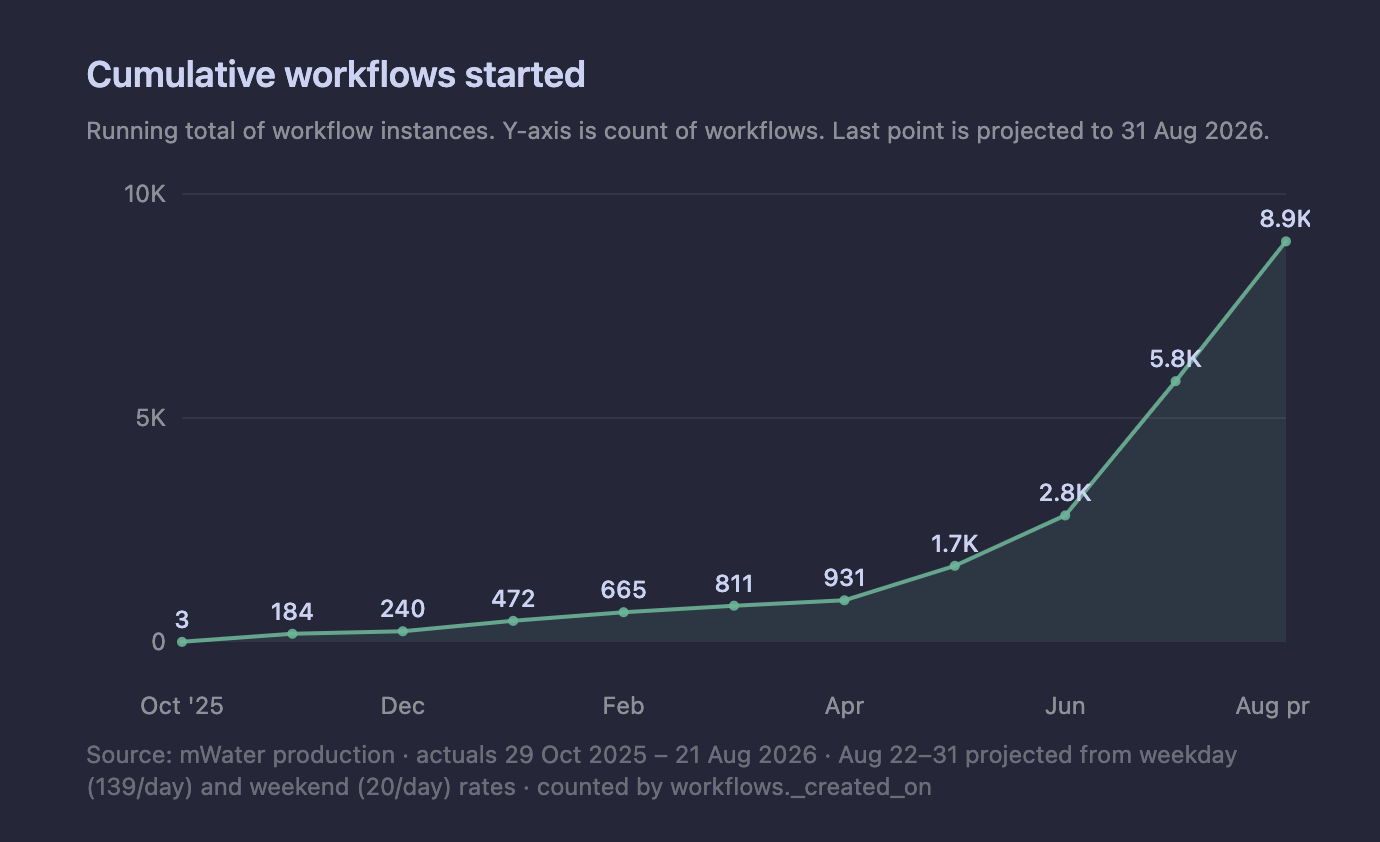
Read MoremWater users, utilities foremost amongst them, stand to gain real monetary value and much more by adopting workflows. In this post, mWater’s Head of Product, Petri Autio, reflects on learnings so far.
Read MoremWater’s Sanitation Asset Standard gives practitioners such as service providers, government regulators, and development partners a common language for sanitation assets, so that data can be collected once, understood consistently, and reused across tools and institutions.
Read MoremWater is in Geneva for the AI for Good Global Summit at Palexpo (7–10 July), the United Nations’ flagship AI event, organized by the ITU and co-convened with the Government of Switzerland.
Read MoreHow mWater designed its platform for AI agents: an MCP server, human-in-the-loop data writes, and four lessons for anyone building data platforms in WASH.
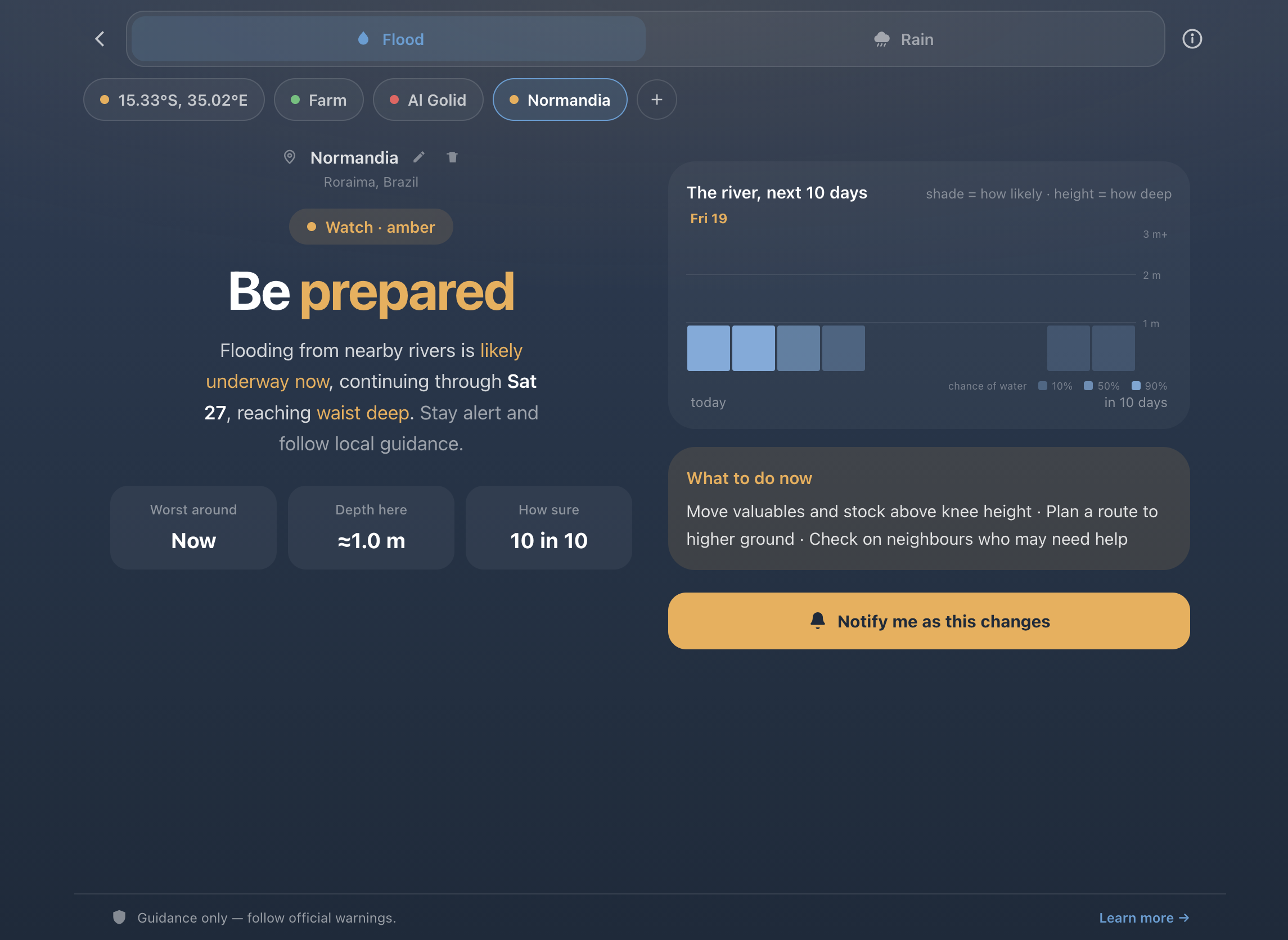
Read MoreAs a potentially historic El Niño builds, Horizon gives anyone, anywhere, a clearer view of river-flood risk and incoming heavy rain, including where weather radar doesn't reach.
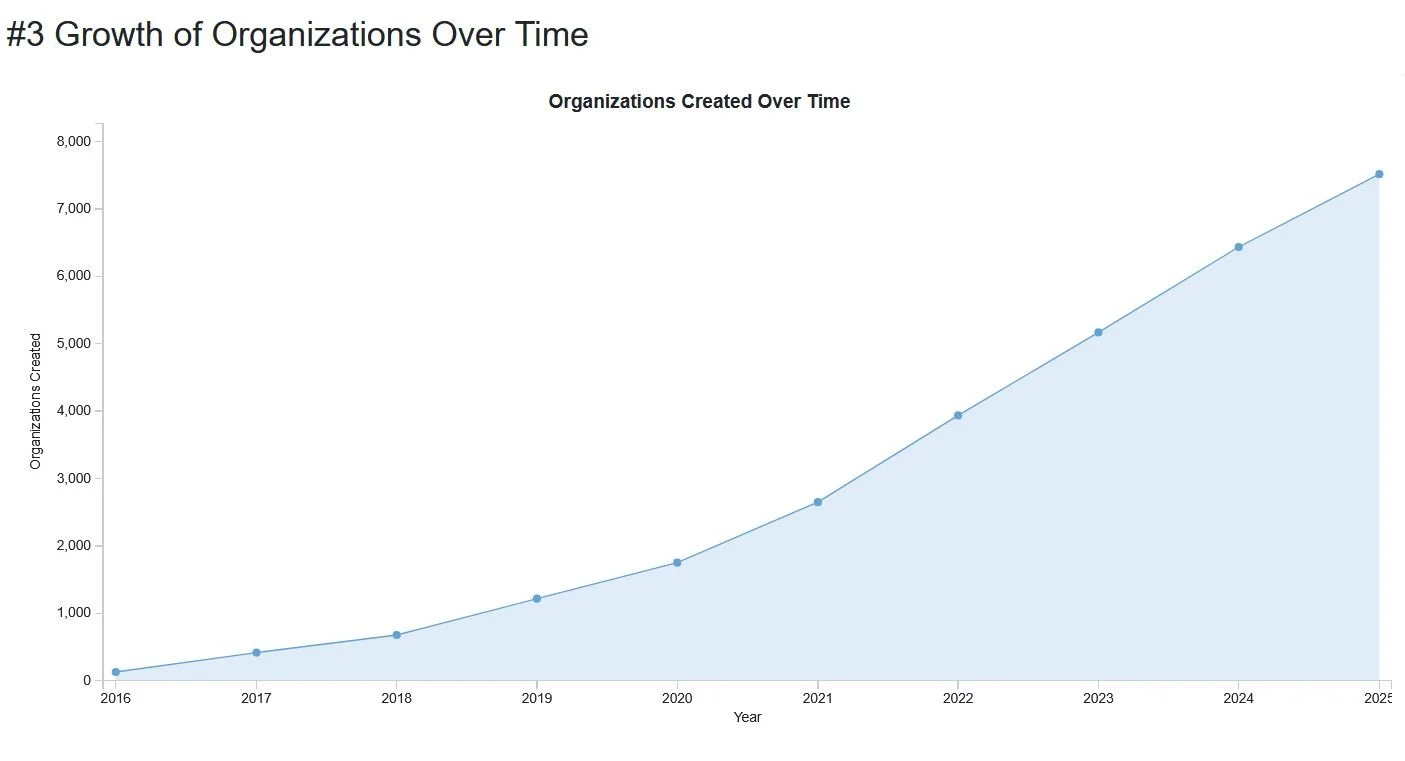
Read MoreWe looked at how over 7,000 organizations are structured on mWater, and the range has impressed us.
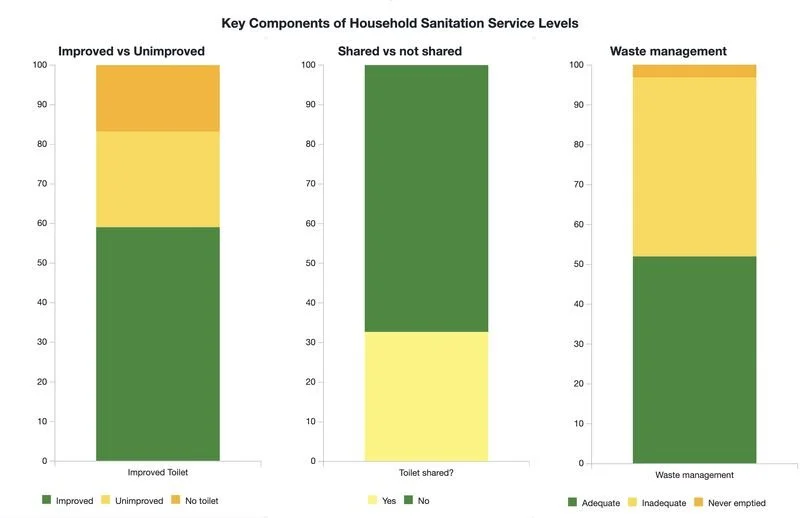
Read MoreAlmost 260,000 data points classified using the JMP service ladder from Open Defecation through to Safely Managed.
Read More360,000 users. 198 countries. 46 million surveys. 6.7 million infrastructure sites. We published our platform numbers in one place.
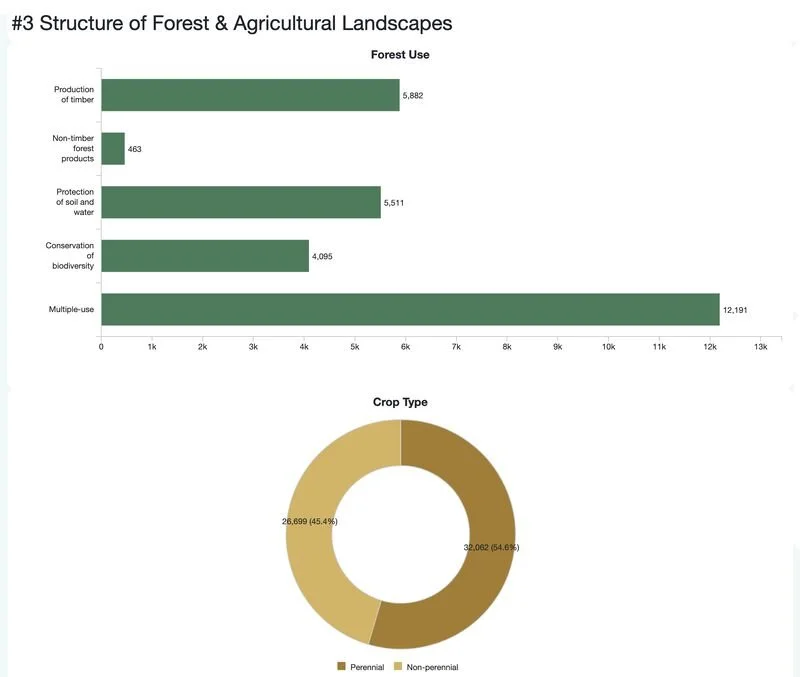
Read MoreWhere are the world's food systems actually taking shape? On farms and in forests that someone has to map.
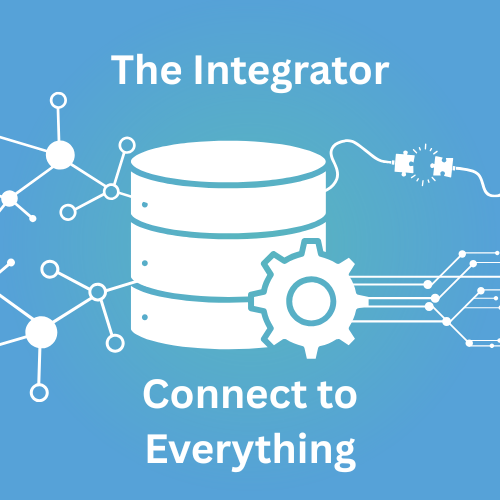
Read MoreLearn about the Integrator. Connect any external data source to mWater, or share mWater data with any external system, using plain language. The AI builds the integration for you. Feature funded by UNICEF Madagascar.
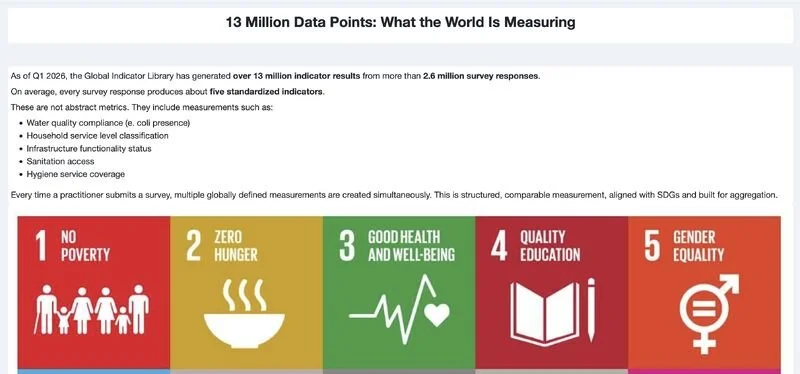
Read More2.6 million survey responses. Over 13 million standardized indicator results. We dug into the data behind the Global Indicator Library.
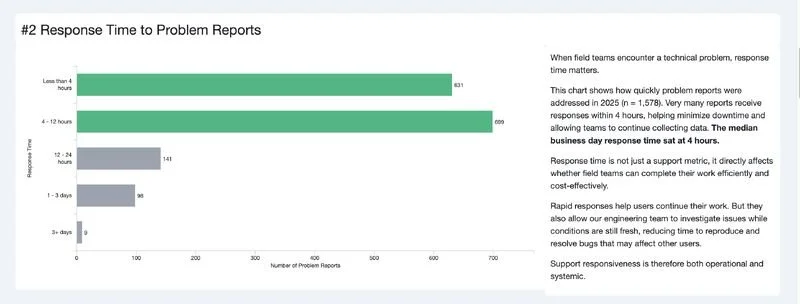
Read MoreIn 2025, mWater received 1,578 problem reports from users collecting data in the field across mobile and web environments. Ease of use and user satisfaction are of paramount importance for us as we run and develop our platform, and we put in every effort to resolve user issues.
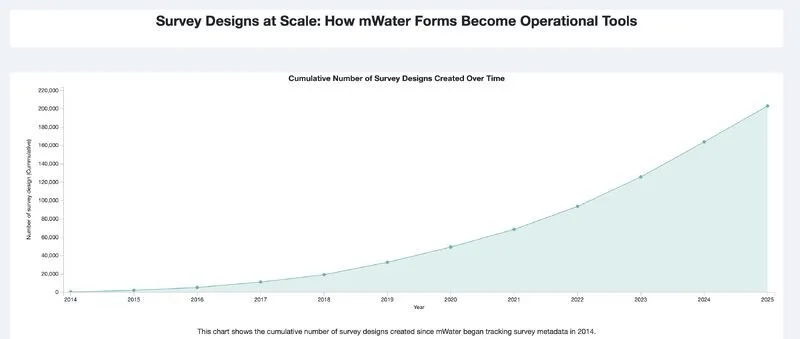
Read MoreSince 2014, over 200,000 survey designs have been created in mWater and more than 44 million responses submitted.
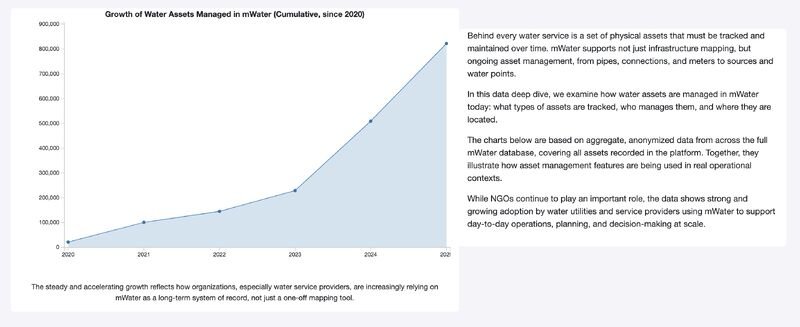
Read MoreBuilding sustainable water services is less about the initial construction and more about the quiet work that happens every day to keep systems running.
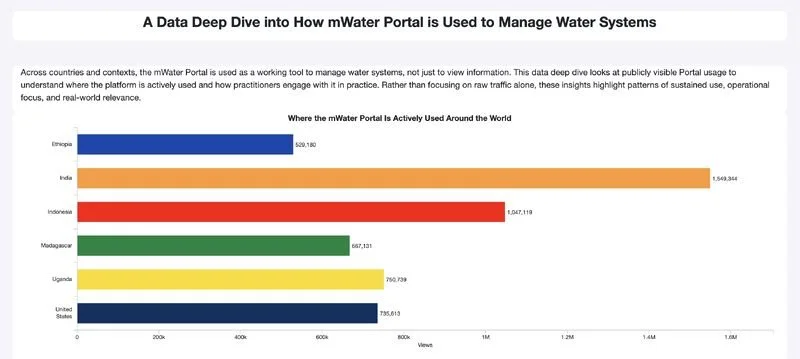
Read MoreLooking at publicly visible Portal activity provides a useful window into how the mWater Portal supports day-to-day water system management.
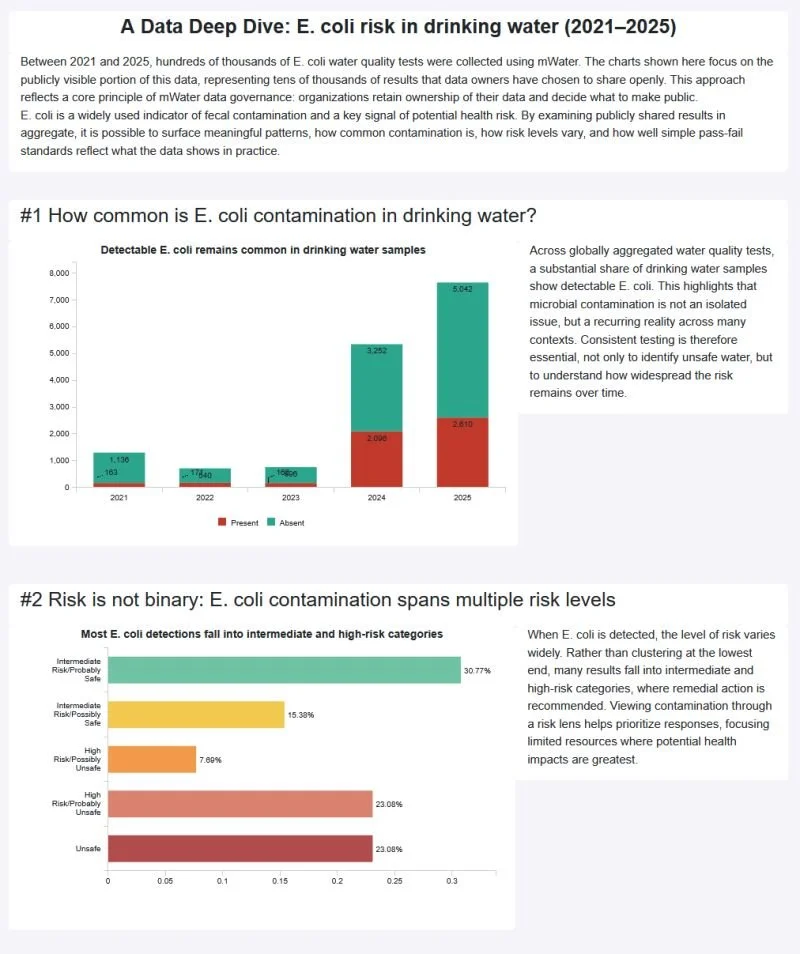
Read MoreThis data deep dive highlights the sharp rise in E. coli detection rates from 2021 to 2025, emphasizing that contamination is not isolated but widespread—underscoring the need for consistent water quality testing.
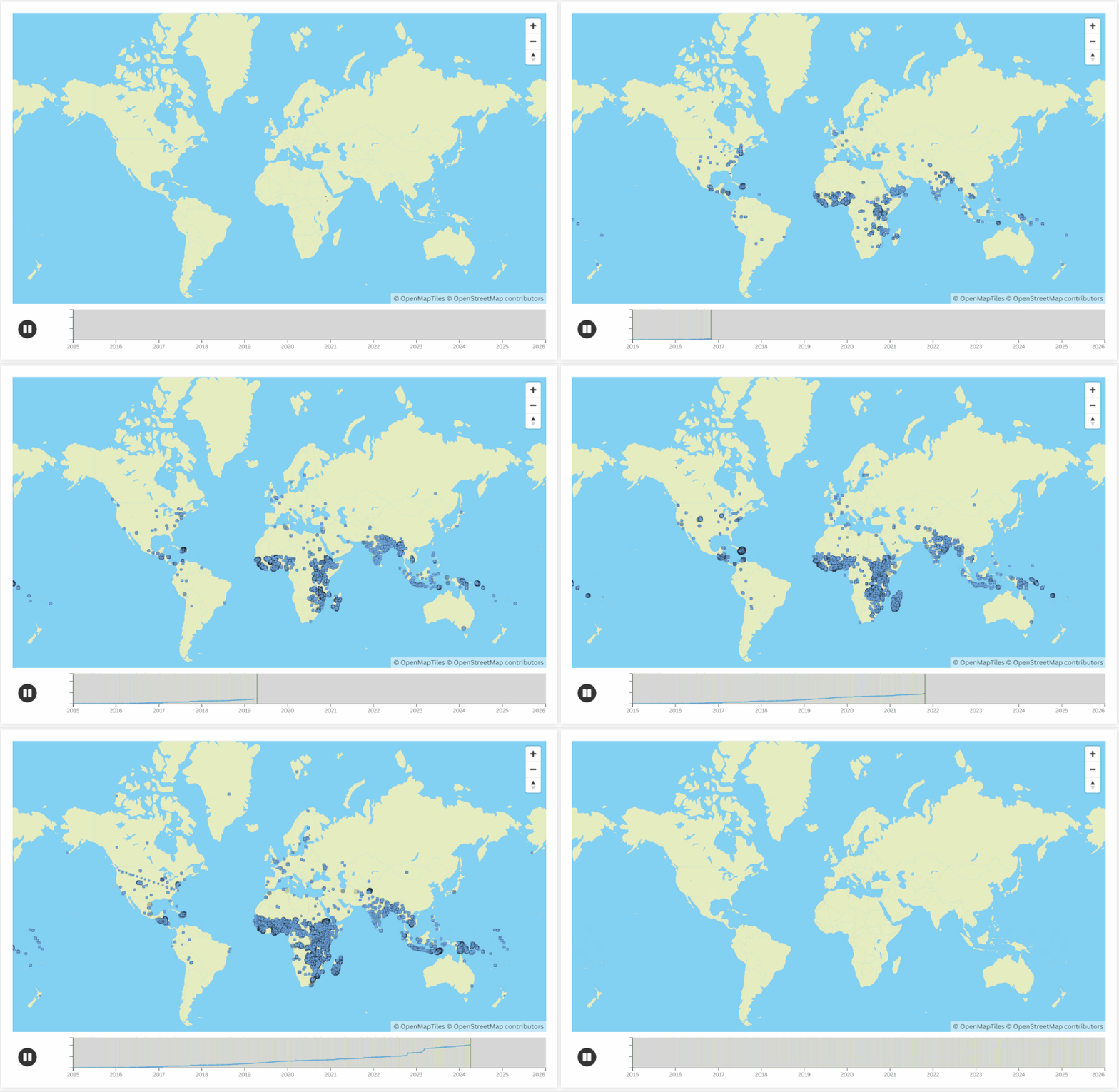
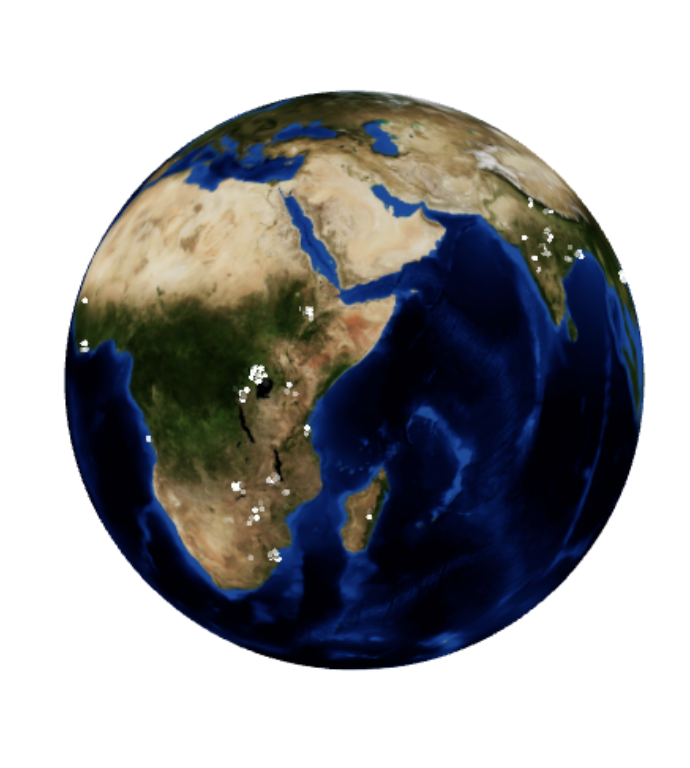
Read MoreInaugurating this year's set of deep dives into publicily visible data in mWater, here's an animation of water point infrastructure mapped in the last ten years, each dot representing one of the more than one million points mapped.
Read MoreSummarizing the new developments and projects of the year from the collapse of USAID to the major new feature releases of customer management, billing, accounting, and workflows.
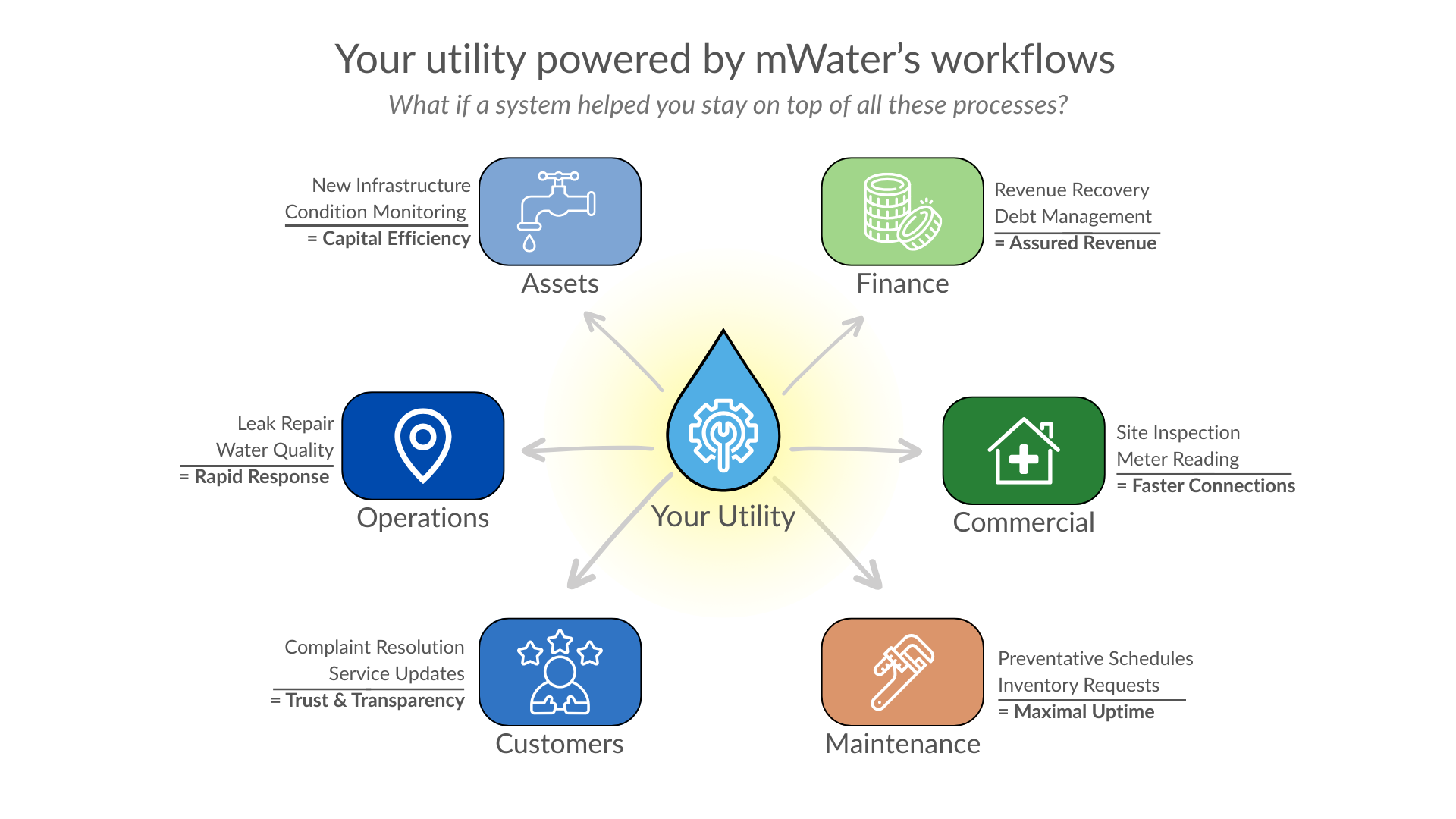
Read MoreFrom automating leak repair assignments in Operations to streamlining customer onboarding in Commercial, Workflows integrates seamlessly with your existing mWater data to boost capital efficiency, ensure revenue, and speed up response times.
Read More