
Introducing mWater Workflows: The Operating System for Your Water Utility
Petri Autio 2025
Is your utility still managing 21st-century infrastructure with 20th-century tools (spreadsheets and paper)?
With mWater’s workflows, you can freely digitize your processes to increase revenue, speed up operations, and keep your customers happier than ever.
What Are mWater Workflows?
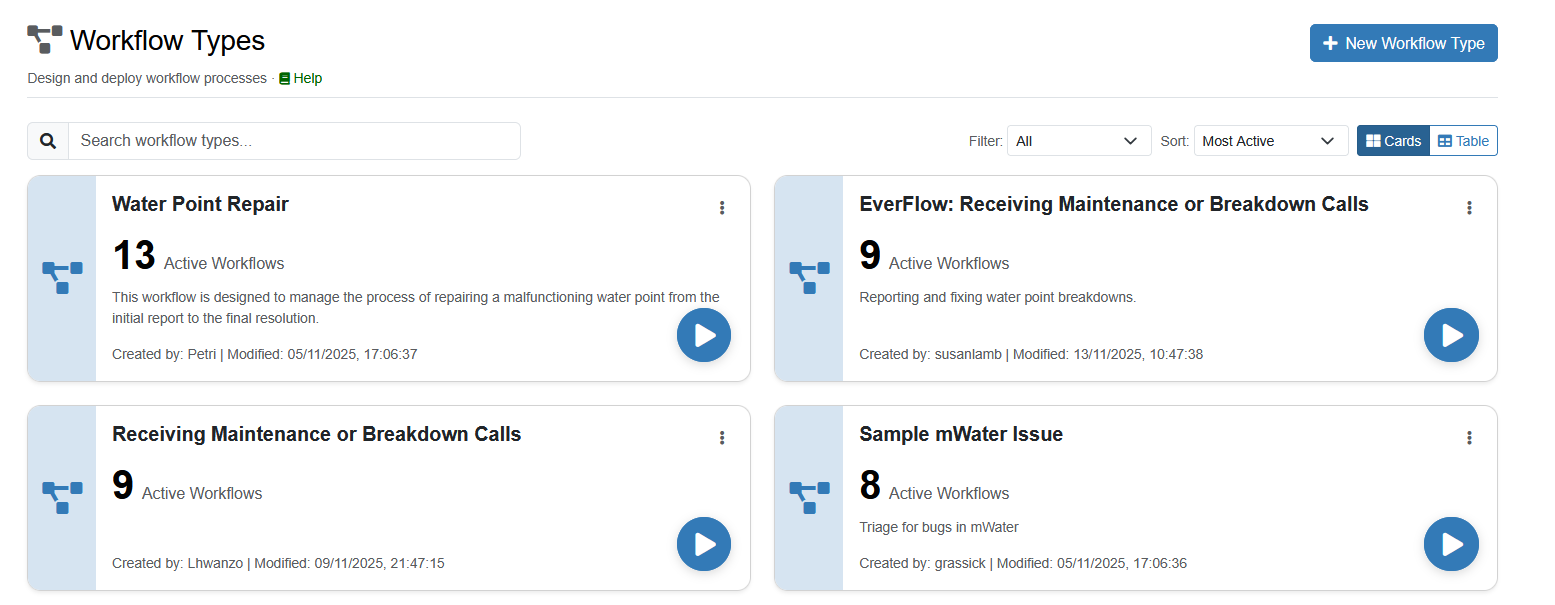
At its core, a workflow is a digital roadmap for your daily operations. While a standard digital form captures data at a single point in time, mWater Workflows connects those data points into a living process that moves from start to finish. Built with a no-code designer, Workflows allows you to map out complex sequences, such as assessments, approvals, hand-offs, and conditional logic, without writing a single line of code. It transforms your static data collection exercises into an active system that tells you what needs to be done next, who should be doing it, and when.

An example workflow: 6-monthly maintenance visits. To complete a visit Step, the listed Actions need to be completed. Once the result is verified, the next visit is automatically scheduled 6 months down the line.
Managers see what needs to be done, who is doing it (and are they actually doing it). Workers know what to do and when, and can easily report on their results.
How Do Workflows Power the Modern Utility?
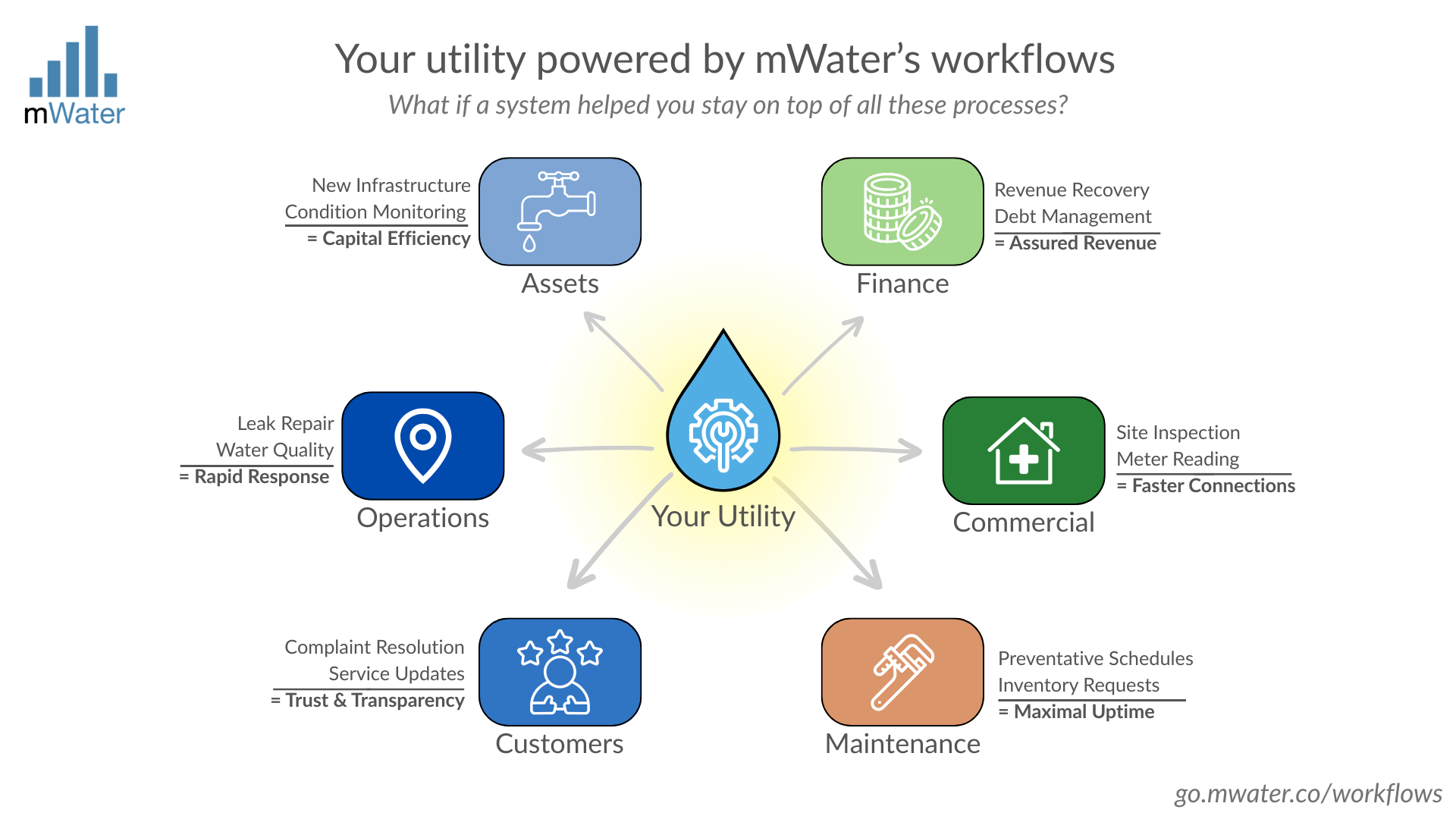
For a water utility, this means breaking down the silos between your field teams, your office staff, and your management. Imagine a Leak Repair Workflow: a customer report instantly triggers a ticket in the system, which automatically assigns a site inspection to a field technician. Once the repair is logged, the workflow notifies the finance team to calculate non-revenue water losses and alerts customer service to close the ticket. You can deploy similar automated workflows for Customer Onboarding, Preventative Maintenance, and Debt Recovery (or anything else), creating a central nervous system where Operations, Finance, and Commercial teams work in harmony.
What Are the Concrete Benefits for Your Organization?
The impact of digitizing these processes is measurable and immediate. By automating task assignments and reminders, you drastically reduce the friction and messiness that slows down operations. This leads to faster connection times for new customers and rapid response times for leaks. This then contributes to Capital Efficiency (better asset tracking), Revenue Assurance (fewer missed payments), and Maximised Uptime (proactive maintenance). Instead of chasing paperwork or digging through email threads to find the status of a job, managers gain real-time visibility into every bottleneck, empowering them to make data-driven decisions that improve both the bottom line and customer trust.
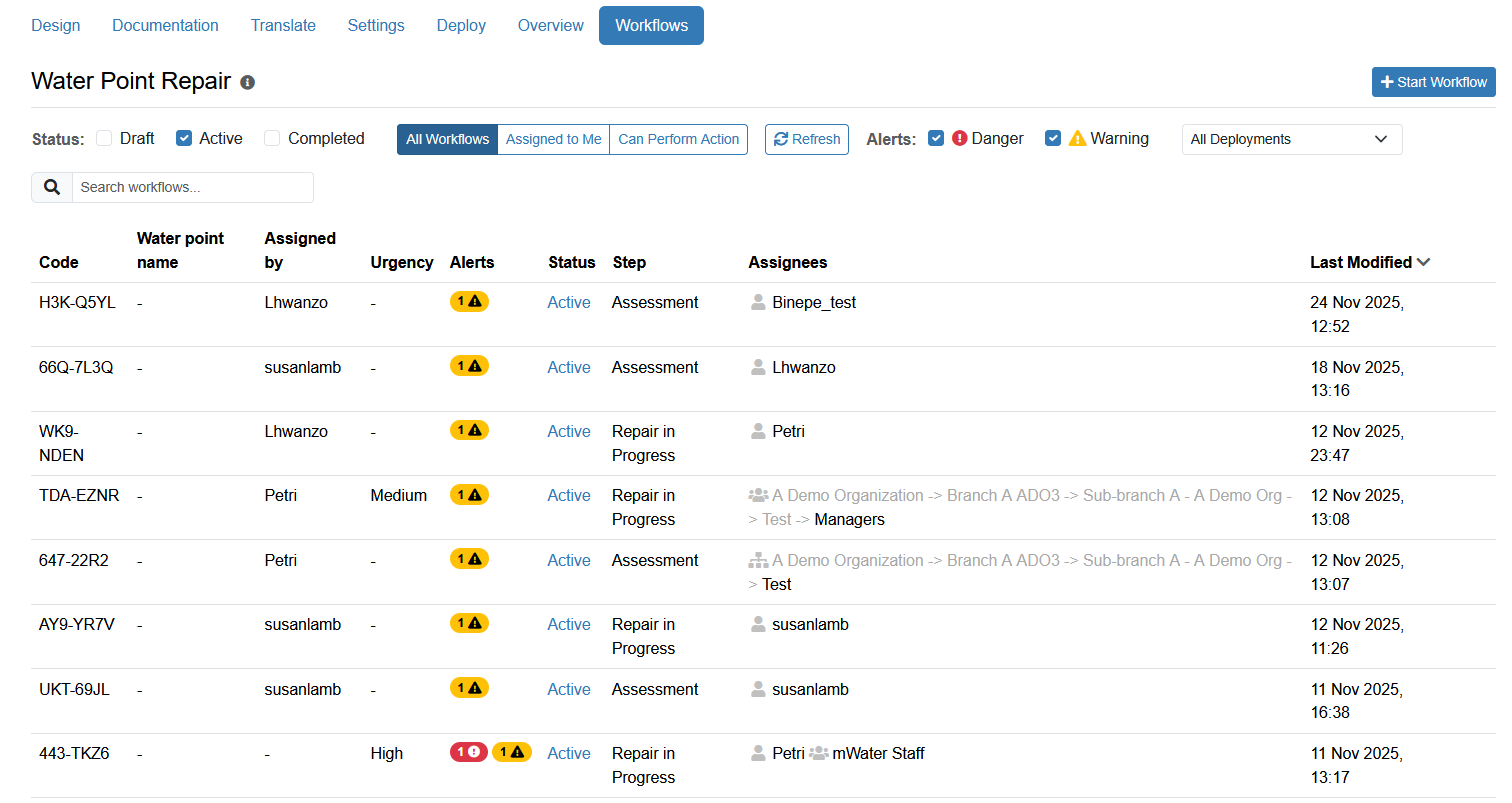
A list of active repair workflows. See exactly who is working on what and where attention needs to be paid.
Beyond the Utility: Automate Anything
While utilities are a perfect fit, the power of mWater Workflows extends to any sector that relies on structured processes. Whether you are managing patient care pathways in a healthcare clinic, tracking loan applications in a microfinance institution, or coordinating crop harvests across an agricultural cooperative, the principle remains the same: if you can map the process, you can automate it. mWater Workflows gives you the flexibility to design, deploy, and refine any operational process, turning chaos into clarity for organizations of any size, in any sector.
Interested? Help us help you
If you want to learn to use workflows, you can read our guide at https://portal.mwater.co/#/resourcecenter/workflow_types.
We’re also actively working on adding great templates for workflow types, both for water utilities and beyond. Want to work on that with us? Get in touch.
Our thanks to UNICEF Madagascar for funding this feature.
Contact us: info@mwater.co